

Guides
How cross-chain swaps work, end-to-end — concepts, walkthroughs, safety.
Step-by-step guides for cross-chain swaps. Every guide starts from a real user question — how to bridge BTC, what non-custodial really means, how a quote is calculated — and answers it without jargon. Written by our routing team, reviewed for technical accuracy.
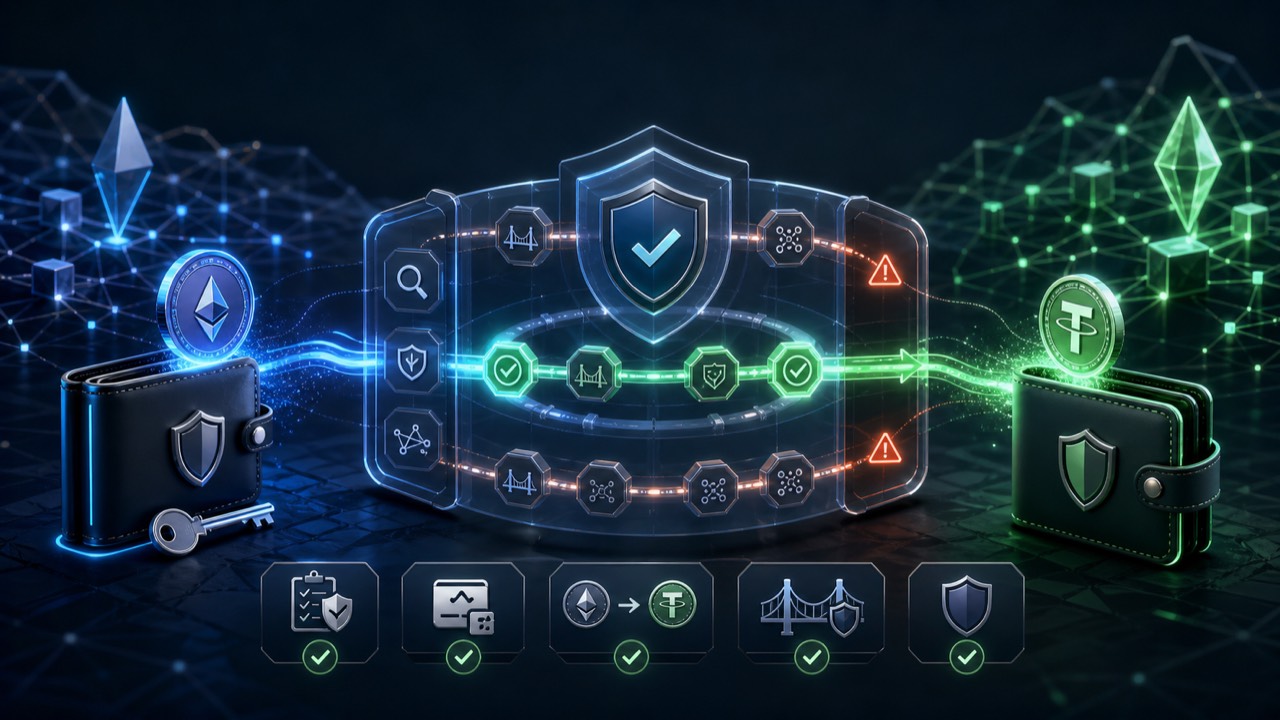
Is cross-chain swapping safe? An honest breakdown
Cross-chain swapping is reasonably safe when routing is non-custodial, contracts are audited on every chain used, and bridges in the path have a clean operational record. The biggest risk vector historically is not the swap layer itself — it's bridge contracts holding pooled liquidity, which have lost over $2.5B since 2021. Aggregators reduce (but don't eliminate) this by spreading volume across many bridges and using audited venues; you reduce it further by checking the destination chain, address, and starting with a small test for new routes.
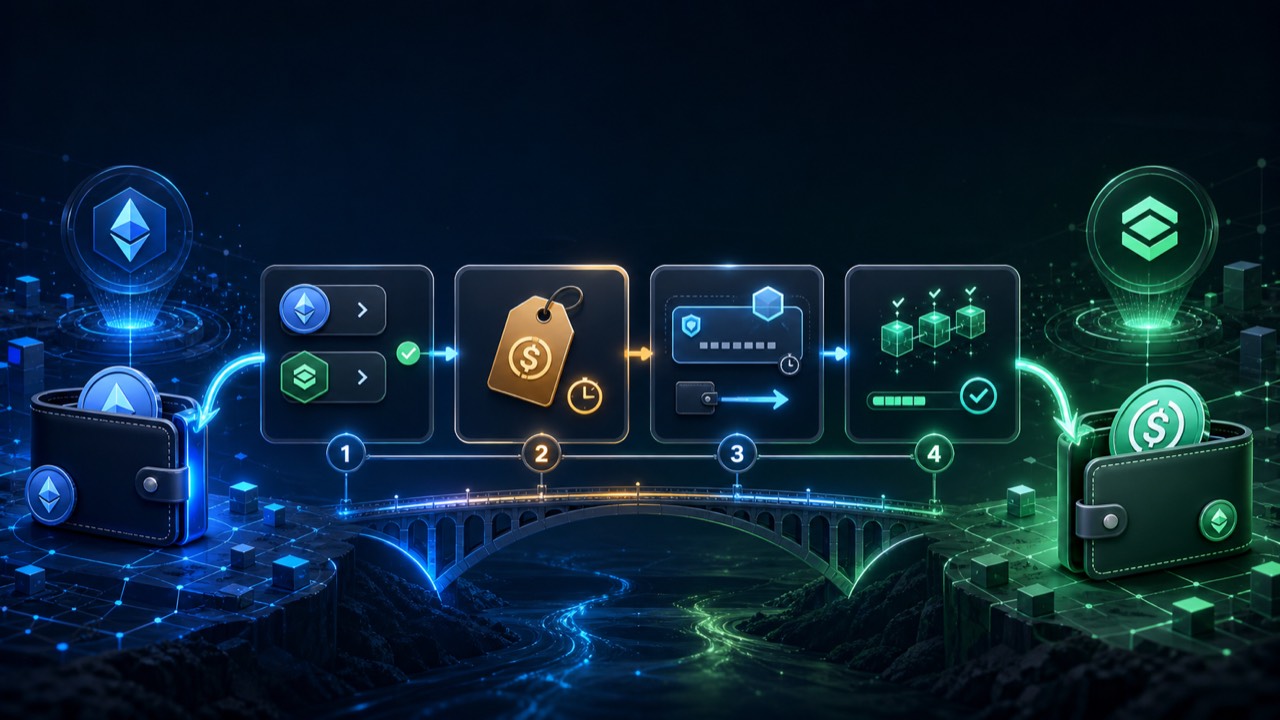
How to bridge crypto between chains (step-by-step)
Bridging crypto in 2026 takes four steps and about three minutes for most chains: pick your source asset + destination asset/chain, get an all-in quote, send your source funds to the one-time deposit address shown, watch the destination address fill on-chain. No account, no wallet connection, no KYC needed for crypto-to-crypto.
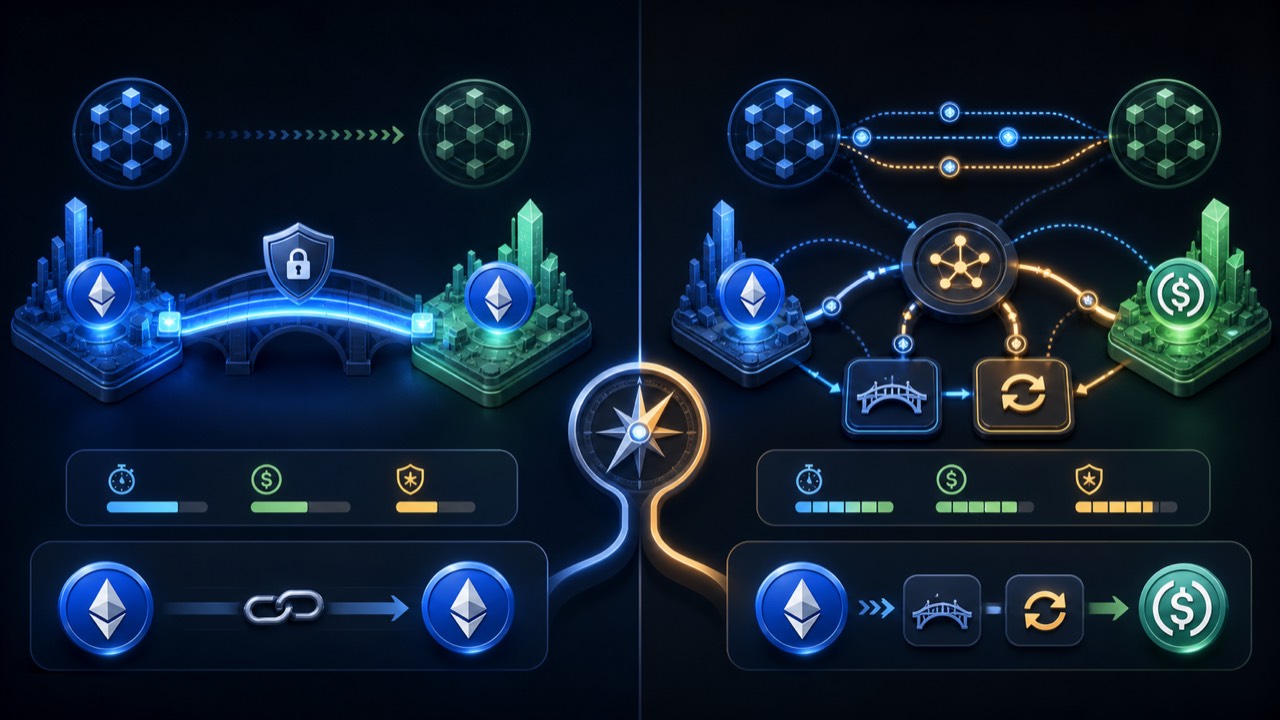
Cross-chain swap vs bridge: when to use which
A bridge gives you the same asset on a different chain (ETH → ETH-on-Arbitrum). A cross-chain swap changes both the asset and the chain (ETH → USDC-on-Base). For single-asset chain switches, a direct bridge is simpler; for changing tokens, a cross-chain swap saves you a separate DEX trade and one round of gas. Aggregated routing usually beats a single bridge on price.
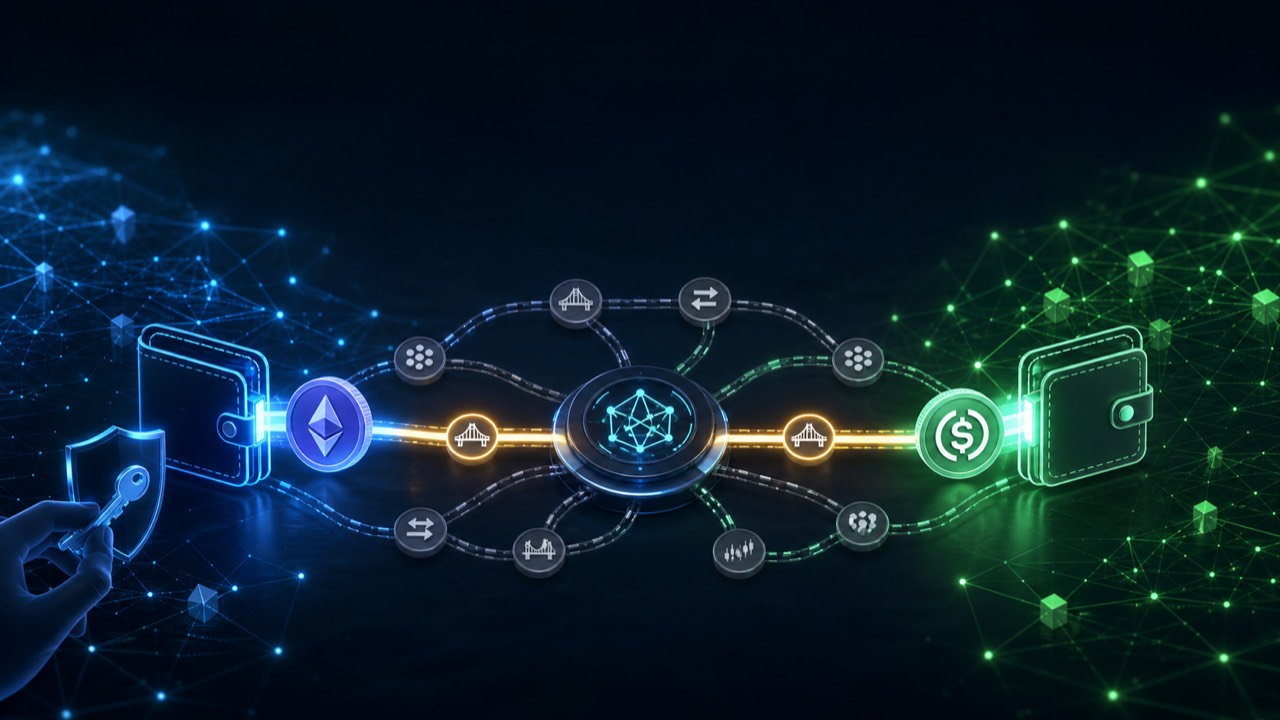
What is a cross-chain swap?
A cross-chain swap exchanges Token A on Chain X for Token B on Chain Y in a single, non-custodial flow. Under the hood, a routing engine combines a bridge transfer with one or more DEX trades, picks the cheapest path across many bridges and market makers, and settles the destination token to your address — usually within minutes, with funds in your control the entire time.