

Articles by Winter.Lau

Leaderless Consensus: Logical Clocks, Dependency Graphs, and Avalanche Sampling
Leaderless consensus removes fixed ordering roles, but ordering cost moves into dependency graphs, conflict sets, randomized sampling, and clock discipline. This article analyzes EPaxos, Avalanche, and cross-chain routing risk.

Ethereum Single-Slot Finality: Why SSF Is Blocked by Signature Aggregation
Ethereum SSF is not just a plan to make finality 12 seconds. It is a hard engineering problem around BLS aggregation, validator-set management, liveness recovery, and cross-chain settlement risk.

PoS Long-Range Attacks and Weak Subjectivity: Why New Nodes Need Recent Checkpoints
PoS long-range attacks are not ordinary short reorgs. They target new or stale nodes that lack recent checkpoints and may accept ghost histories signed by old validator keys. This article analyzes weak subjectivity, Gasper, VDFs, forward-secure signatures, and cross-chain finality risk.

Multi-Pool Sandwich Risk: How DeFi Routes Detect Transient Wrong Prices
Multi-pool sandwich risk is not only local AMM slippage. Price impact, TWAP lag, oracle caches, liquidation thresholds, and cross-chain delay can combine into a transient wrong-price state. This article models defensive slippage VaR and route-level price-quality gates.

Under-Constrained ZK-Rollup Circuits: How Missing Constraints Break State Proofs
A valid ZK proof does not automatically mean a valid Rollup state transition. This article analyzes under-constrained circuits, Circom and Halo2 constraint semantics, SMT-based formal verification, static analysis, and why proof semantics matter for cross-chain routing.

Cross-Chain Bridge Signature Forgery and Merkle Proof Fraud: Where Verification Semantics Fail
Bridge failures often come from verifier semantics, not broken cryptography. This article analyzes signature-domain mistakes, Merkle empty witnesses, signer deduplication, validator-set timing, replay domains, and route-risk implications.

Solana Write-Lock Exhaustion: Account Contention, Local Fee Markets, and SVM DoS Defense
Solana parallel execution depends on declared account access. Hot writable accounts can serialize Sealevel execution and create local DoS pressure. This article analyzes conflict graphs, local fee markets, early drop, and routing defenses.

Yul and EIP-1153 Reentrancy: Transient Storage, Slot Overlap, and State Poisoning
EIP-1153 makes transaction-scoped locks cheaper, but it also creates new audit surfaces. This article analyzes Yul slot overlap, transient state poisoning, CFG reentrancy windows, delegatecall namespaces, and defensive static-analysis rules for EVM contracts.

Ethereum PoS Double-Signing Forensics: Validator Slashing and Reorg Boundaries
Ethereum PoS double-signing is compact consensus evidence, not just signing twice. This article explains BLS-backed proposer and attester slashing, LMD-GHOST reorg boundaries, balancing attacks, and how finality risk affects cross-chain route policy.

Decentralized ZK Prover Networks: Proof Markets, Front-Running, and Rollup Settlement Risk
Decentralized ZK prover networks are not just outsourced compute. This article analyzes proof task sharding, Proof-of-Useful-Work, proof-result front-running, tree aggregation, and hardware centralization as settlement risks for rollups and cross-chain routing.

Nested ZK Proofs for Layer 3 Settlement and Cross-L3 Refund Safety
Nested ZK proofs can compress L3-to-L2-to-L1 verification, but they do not remove preconfirmation risk, data availability constraints, proof lag, or refund ambiguity.

Validium DAC Risk: Data Availability and Cross-Chain Exit Safety
Validium cost savings come from moving data availability offchain. This article analyzes DAC certificates, data withholding, witness recovery, Rollup fallback, and AllSwap routing risk.

Modular Liquidity Layers: Virtual Balances and Cross-Rollup Settlement Risk
A modular liquidity layer does not create free liquidity. It uses solver inventory, virtual balances, and net settlement to reduce rebalancing frequency while making settlement risk explicit.

ZK-Rollup Escape Hatches: Forced Withdrawals and Cross-Chain Refund Safety
A ZK-Rollup escape hatch is not a fast-withdrawal feature. It is the final asset-safety boundary when sequencers censor users, proofs stall, or the Rollup enters frozen mode.
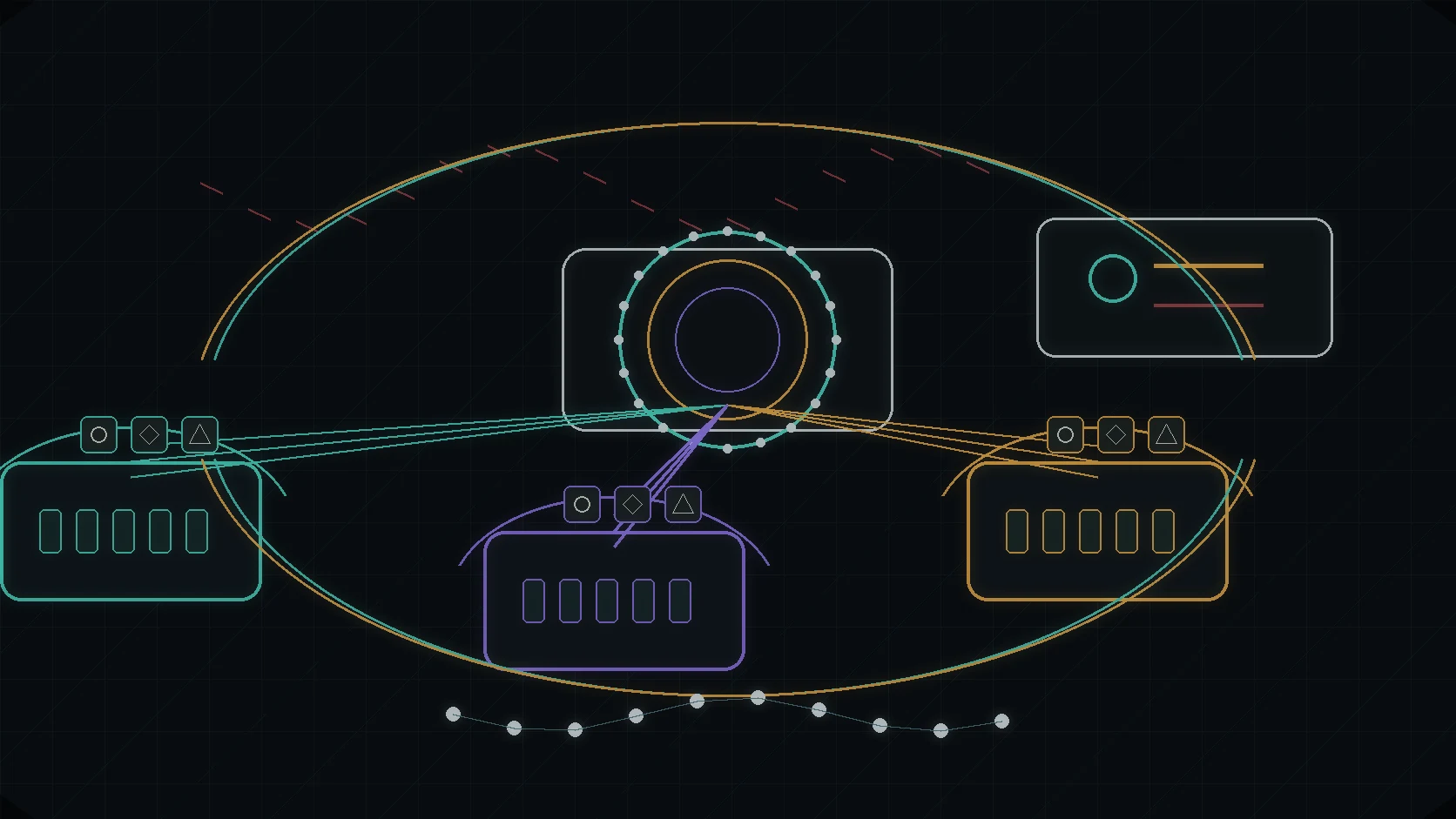
Cross-Rollup Atomicity: Shared Sequencers, State Locks, and 2PC
Shared sequencers can align input ordering across rollups, but they do not automatically guarantee atomic execution. This article analyzes state locks, 2PC, receipts, rollback, and route scoring.
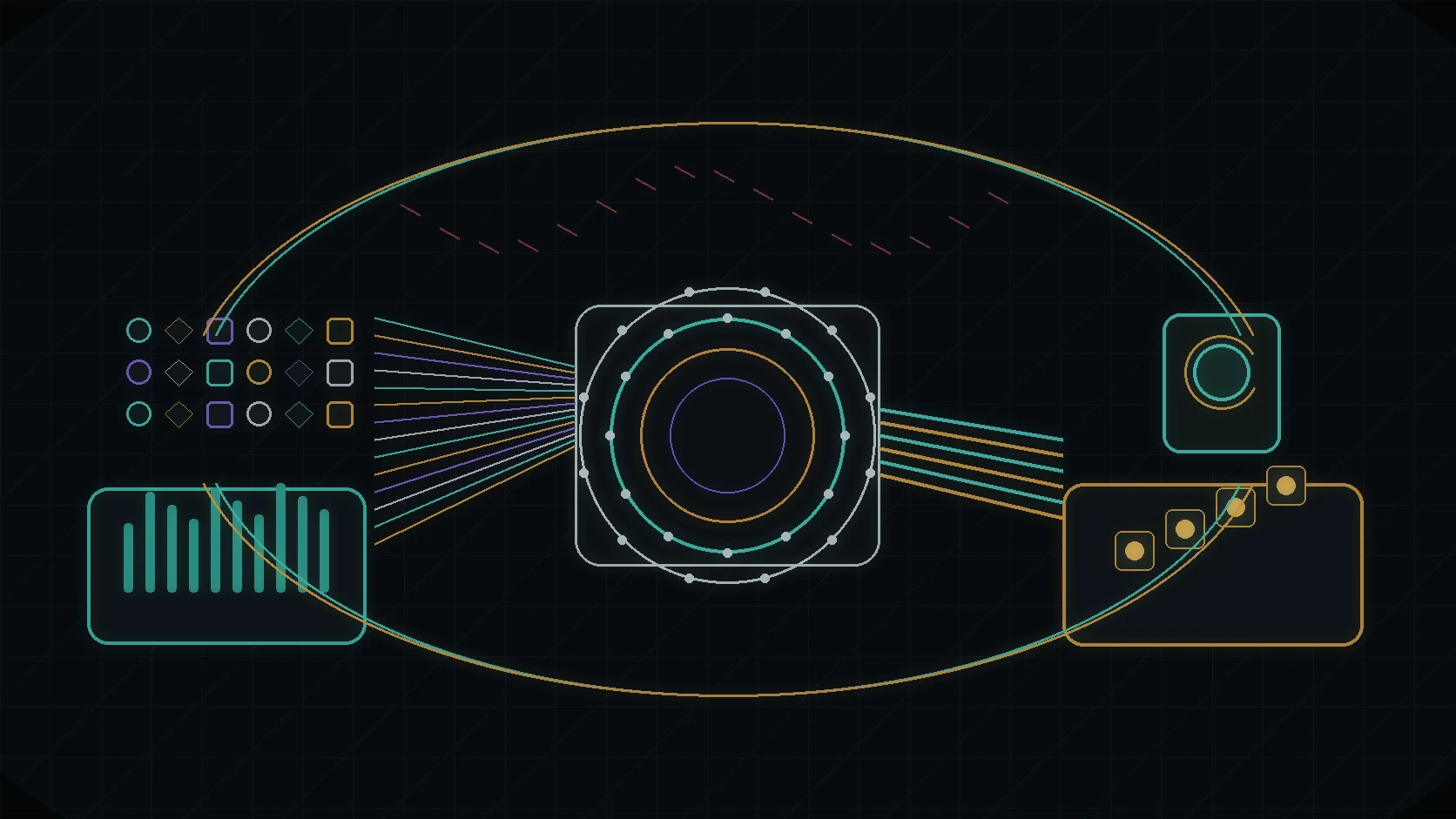
ZK Light Clients and Non-Native Field Costs in Cross-Chain Verification
ZK light clients can compress cross-chain consensus verification into onchain proof verification, but the real cost is non-native field arithmetic across Ed25519, Tendermint, recursive proofs, and heterogeneous state roots.

Omnichain Native Assets: Burn-and-Mint and the Cross-Chain Supply Invariant
Cross-chain asset safety is not about ticker names. It is about whether supply is conserved, reserves are auditable, mint authority is constrained, and routers can distinguish native assets from wrapped claims.

Cross-Chain AMP Anti-Front-Running: Time-Locks, VDFs, and Optimistic Queues
Cross-chain AMP risk is not only message verification; it is also destination-chain ordering. This article analyzes how time-lock puzzles, VDFs, and optimistic queues can reduce front-running, sandwiching, and unattributable refunds.

Solver Monopoly in Chain Abstraction: Dynamic Order Allocation for Cross-Chain Swaps
Chain abstraction turns cross-chain execution into user-signed intents, but it also moves pricing power to off-chain solvers. This article analyzes solver centralization through repeated games, stochastic dominance, multi-attribute utility, and failure attribution.
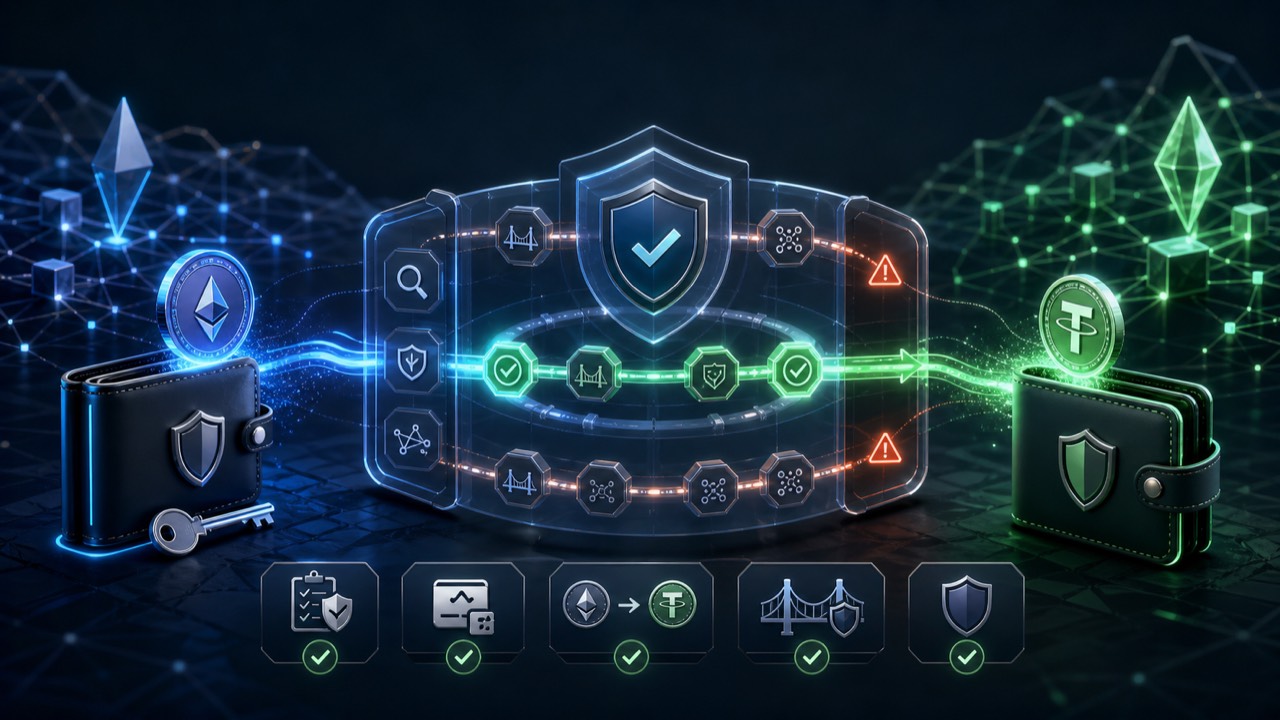
Is cross-chain swapping safe? An honest breakdown
Cross-chain swapping is reasonably safe when routing is non-custodial, contracts are audited on every chain used, and bridges in the path have a clean operational record. The biggest risk vector historically is not the swap layer itself — it's bridge contracts holding pooled liquidity, which have lost over $2.5B since 2021. Aggregators reduce (but don't eliminate) this by spreading volume across many bridges and using audited venues; you reduce it further by checking the destination chain, address, and starting with a small test for new routes.

How to bridge crypto between chains (step-by-step)
Bridging crypto in 2026 takes four steps and about three minutes for most chains: pick your source asset + destination asset/chain, get an all-in quote, send your source funds to the one-time deposit address shown, watch the destination address fill on-chain. No account, no wallet connection, no KYC needed for crypto-to-crypto.
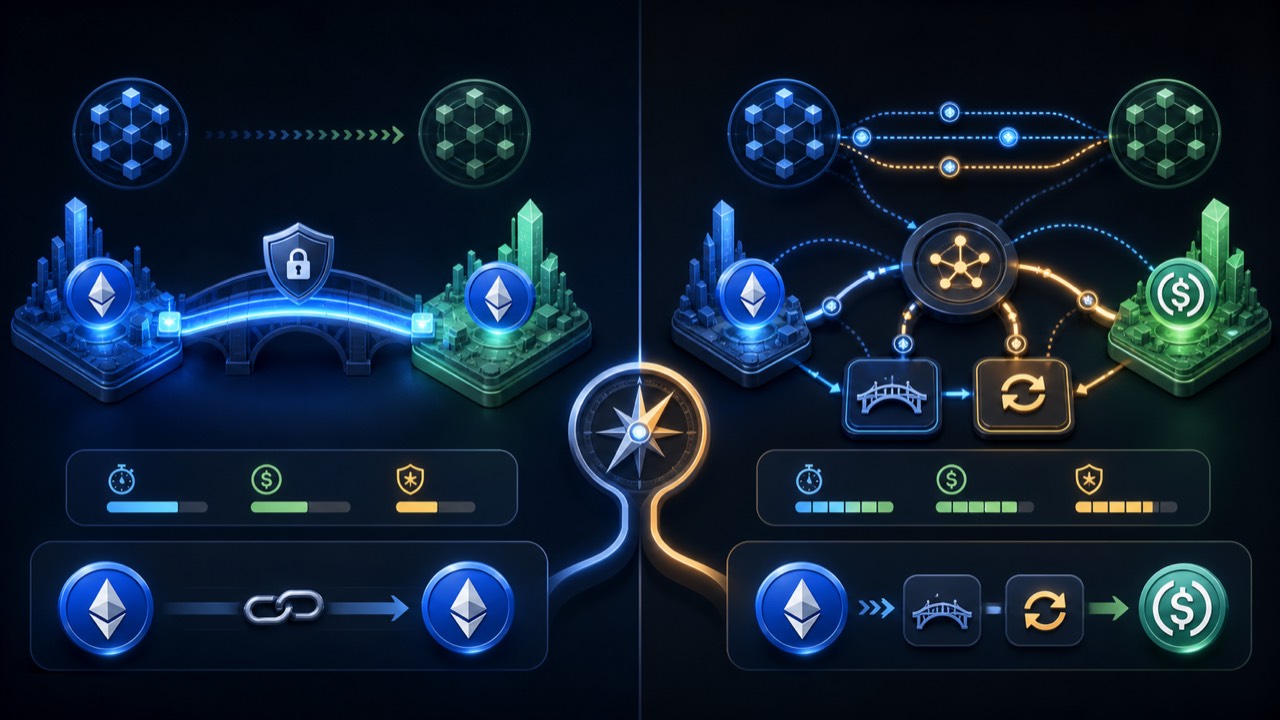
Cross-chain swap vs bridge: when to use which
A bridge gives you the same asset on a different chain (ETH → ETH-on-Arbitrum). A cross-chain swap changes both the asset and the chain (ETH → USDC-on-Base). For single-asset chain switches, a direct bridge is simpler; for changing tokens, a cross-chain swap saves you a separate DEX trade and one round of gas. Aggregated routing usually beats a single bridge on price.

What is a cross-chain swap?
A cross-chain swap exchanges Token A on Chain X for Token B on Chain Y in a single, non-custodial flow. Under the hood, a routing engine combines a bridge transfer with one or more DEX trades, picks the cheapest path across many bridges and market makers, and settles the destination token to your address — usually within minutes, with funds in your control the entire time.